Toubab Dialao
A cliff village where the djembés rehearse all day, fifteen minutes from the airport.
- Nature
- Beach
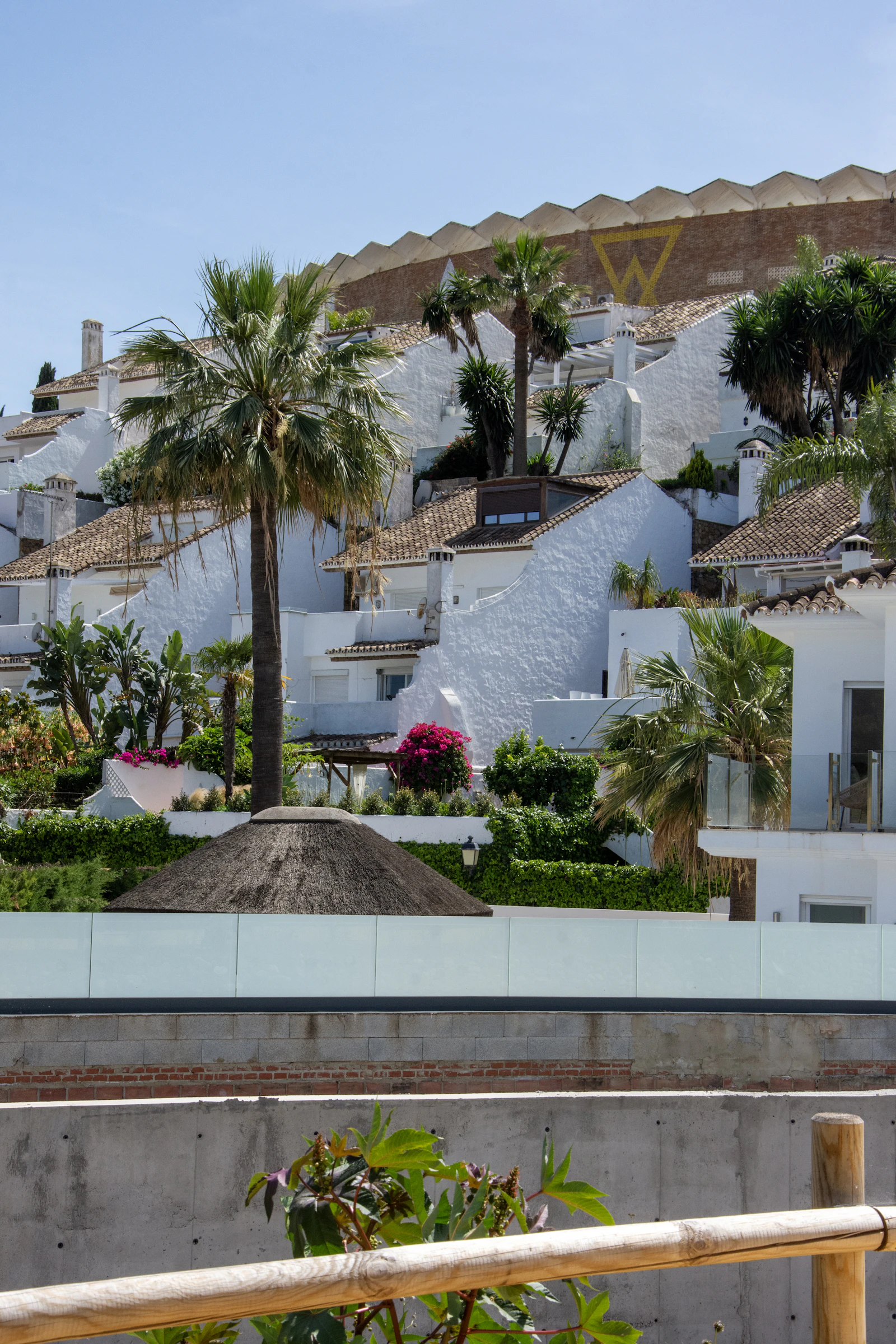
Toubab Dialao sits on a red laterite cliff, fifty kilometres from Dakar and a quarter of an hour from the airport, which makes it the first fishing village you can reach before you have even unpacked. Below: a short beach, pirogues hauled up dry, children diving off the rocks. Above: low houses of mud brick and stone, workshops, and the sound that defines the place — djembés and sabars rehearsing from morning until sunset, nearly every day of the week.
The village owes that reputation to Sobo Badè, the labyrinth house begun in 1975 by the Haitian playwright and ceramicist Gérard Chenet — mosaic staircases, terraces hanging over the water, dance halls open to the sea. Percussion teachers, potters, batik makers and cooks settled around it, serving chicken yassa on painted concrete tables. People come to Toubab Dialao for a week-long drumming course or for three days of doing nothing; either way they leave with the same rhythm in their head.
The day is simple: walk to the point and back along the sand at low tide, grilled fish at two, a nap, a dance class at five, tea on a terrace when the cliff turns orange. The night is dark and quiet — most lanes have no street lighting, bring a torch.
It is not comfortable in the hotel sense: water can run short, so can power, and rooms often have no air conditioning because the sea wind does the job eight months in twelve. It is a lived-in place, and it still looks like what it was before the airport opened fifteen minutes down the road.
The village runs on two rhythms. At weekends Dakar people come down on Saturday morning, eat fish by the water, take a dance class and drive back on Sunday evening; the terraces are full and the drums play late. On weekdays there is nobody but the residents, the percussion students who come for ten days, and two or three travellers. If you want silence, arrive on a Monday; if you want people and music, arrive on a Saturday. That is the only really structural choice to make here.
Getting there
From AIBD: 15 km, 20-25 min via the Yenne road — the closest address to the airport in this whole catalogue, which matters for a night arrival. From central Dakar: 50 km, 1 h to 1 h 15 on the motorway then the coastal Yenne road, which is narrow and unlit after dark. By public transport, a bus to Yenne from Dakar then a local taxi for the last five kilometres (about 2 h in total). Everything on site is done on foot; the path down to the beach is steep and sandy, which matters if you travel with a wheeled suitcase.
Coming up
Petite Côte season, November to May
From November 1, 2026 to May 31, 2027
On the Petite Côte the useful season runs from November to May, and the gap with the rest of the year is not a nuance. November to May: no rain, twenty-five to thirty degrees, a sea between twenty and twenty-six, a north-westerly that drops in the evening, and few mosquitoes. July to September: the rainy season, short violent storms, humidity that sticks, and half of Saly's addresses closed for works.
So everything happens between November and May. Big-game fishing boats leave Saly and Mbour every morning; pirogues go up the Somone lagoon at high tide; the Bandia reserve can be visited without mud; the Mbour markets run at full tilt; and the sunsets, due west, land at the same hour every evening to within ten minutes.
Two peaks to know about: the holiday period from 15 December to 5 January, when Saly is full and prices rise, and the French February school holidays, for the same reason. The best weeks to come quietly are in November, March and May — same sea, same sun, half the people.
December: the month everyone comes home
From December 1 to December 31, 2026
In December, Senegal changes composition. Flights from Paris, Milan, Madrid, New York and Casablanca land full, families drive to AIBD at three in the morning to collect their own, and houses fill with suitcases of presents. It is the month of weddings — more are held in December than in six ordinary months — of naming ceremonies postponed until the uncle from Milan is back, of housewarmings for homes built at a distance over five years, and of reunions planned since the summer.
In practice that means three things. Airfares double from mid-December. Rooms are booked early, especially in Dakar, Saly and each family's home town. And the roads are heavy at weekends, particularly Dakar-Touba, Dakar-Kaolack and Dakar-Saint-Louis.
It is also the best time of year to be here. The weather is dry, it is twenty-five degrees, the sea is still warm, and the drumming in the courtyards never stops before two in the morning. If you are housing someone coming home — a mother, a brother, cousins passing through — this is the month when nobody forgets to count the beds.
Tabaski: the sheep, the family, the road
From May 15 to May 18, 2027
Tabaski — Eid al-Adha — falls on the 10th of Dhu al-Hijjah, which means around Sunday 16 May 2027. In Senegal the exact date is announced a few days ahead by the religious authorities, and the country sometimes celebrates over two days: it has happened again in recent years, and nobody treats it as a crisis.
It is the most important feast of the year. Every head of household who can afford it buys a sheep — prices have been climbing for weeks, sale yards appear on the waste ground of Dakar, and the national conversation is the going rate for a ram. The day before, tailors deliver in a panic the outfits sewn at the HLM market. On the day itself: open-air morning prayer, the sacrifice, the butchering, grilling all day, visits to neighbours and elders, and the formula repeated from house to house to ask forgiveness.
For a traveller: transport is besieged three days ahead — everyone goes back to the village — banks and public offices close, so do many restaurants, and taxis are scarce on the morning of the feast. On the other hand, if you are staying with someone, you will eat as never before.